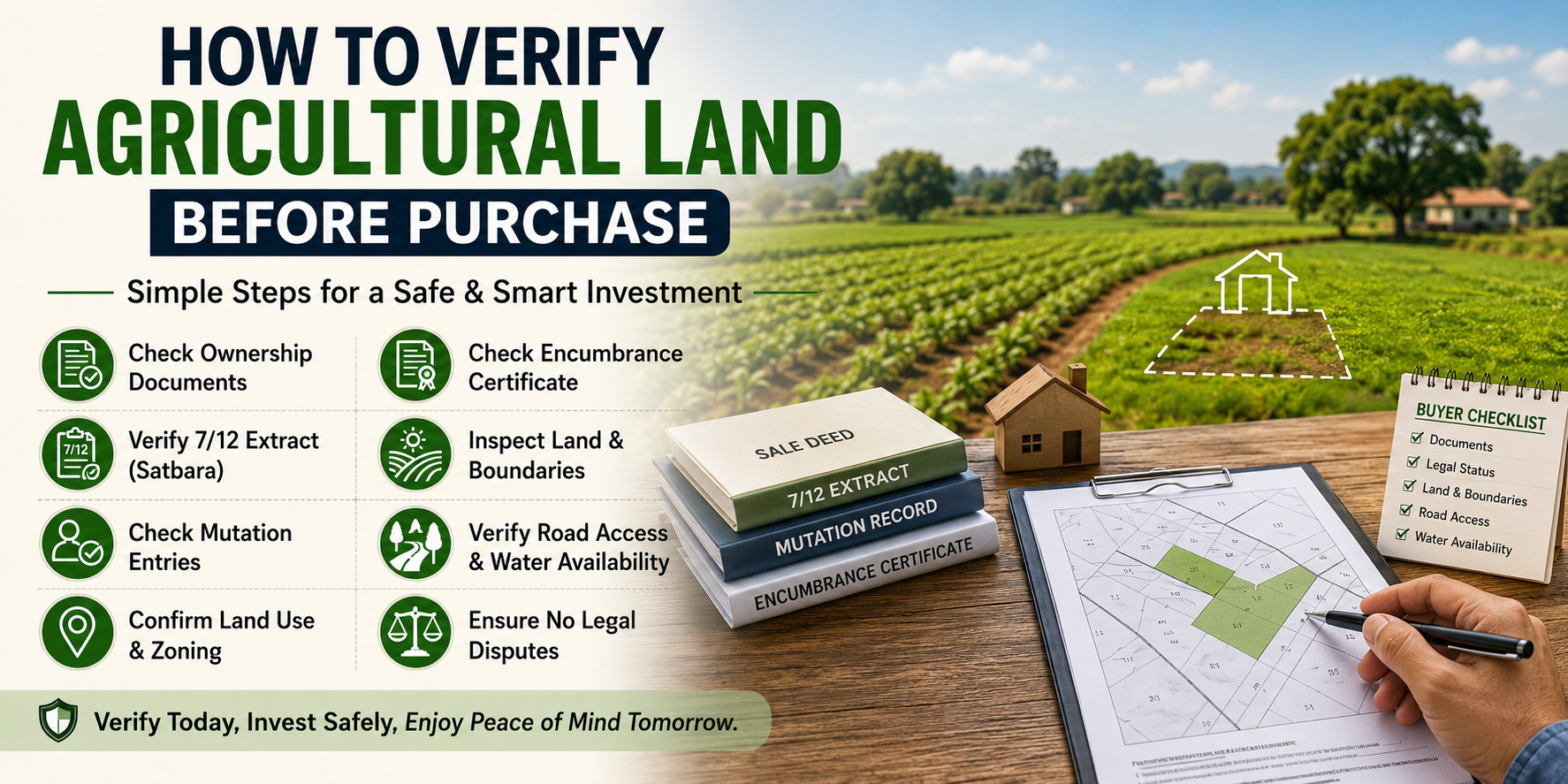
Buying agricultural land is a dream for many people today. Some want to build a peaceful farmhouse away from city life, while others see farmland as a smart long-term investment. In recent years, places around Nashik, Pune, Karjat, and Alibaug have become especially popular for agricultural plots and farmhouse projects.
But before you invest your hard-earned money, one thing is extremely important — proper land verification.
Many buyers make the mistake of trusting brokers or verbal promises without carefully reviewing the legal documents. Unfortunately, this can lead to disputes, fraud, or even loss of ownership in the future.
If you are planning to buy agricultural land in 2026, this guide will help you understand exactly what to verify before making the purchase.
Why Land Verification Is So Important
Unlike apartments or ready homes, agricultural land involves multiple legal and government records. Even if a plot looks attractive, hidden issues may exist behind the paperwork.
Some common problems buyers face include:
- Ownership disputes
- Fake documents
- Illegal possession
- Encroachments
- Loan liabilities
- Government restrictions
- Missing road access
A little verification today can save years of stress later.
1. Check Who Actually Owns the Land
The first thing you should verify is whether the seller is the real owner of the property.
Ask for:
- Sale deed
- Title documents
- Previous ownership records
- Inheritance papers (if applicable)
Make sure:
- The seller’s name matches all government records
- There are no missing ownership transfers
- No family disputes are involved
If possible, get the title checked by a property lawyer. It may cost a little now, but it can protect a much bigger investment later.
2. Verify the 7/12 Extract (Satbara)
If you are buying land in Maharashtra, the 7/12 extract is one of the most important documents.
This document contains:
- Owner details
- Survey number
- Land area
- Crop details
- Loan entries
- Legal remarks
Check carefully whether:
- The owner’s name is correct
- Any bank loan exists on the land
- There are disputed remarks
- The land area matches what is being sold
Never ignore this document while buying agricultural property.
3. Check Mutation Entries (Ferfar)
Mutation records show the history of ownership changes.
These records help you understand:
- Who owned the land previously
- Whether ownership transfers were legally updated
- If inheritance records are complete
Sometimes land is sold without proper mutation updates, which creates future legal complications.
4. Confirm the Land Zone & Usage Rules
Many buyers assume they can build a farmhouse anywhere on agricultural land — but that is not always true.
Some lands fall under:
- Green zone
- Forest zone
- Restricted development zone
- Government reservation area
Before buying, visit the local town planning office and confirm:
- Whether farmhouse construction is allowed
- NA conversion possibilities
- Development restrictions
- Future road or industrial plans nearby
This step is extremely important if you plan to develop the property later.
5. Check for Loans or Legal Liabilities
Sometimes, landowners take loans against their agricultural property.
If you buy such land without verification, you may face legal issues later.
Ask for an Encumbrance Certificate (EC) to check:
- Bank loans
- Mortgages
- Court attachments
- Financial liabilities
A clear EC means the property is legally safer to purchase.
6. Visit the Land Personally
Never buy land only by looking at photos, videos, or brochures.
Visit the site personally and check:
- Actual boundaries
- Road connectivity
- Nearby development
- Water availability
- Encroachments
Many buyers realize later that the physical land is different from what was promised.
7. Verify Road Access
This is one of the most ignored but important checks.
A beautiful plot without proper road access can become a major problem in the future.
Ensure the land has:
- Legal access road
- Proper entry route
- Vehicle accessibility
- No disputes over pathway rights
Good road connectivity also increases future resale value.
8. Check Water Availability
Water plays a huge role in agricultural land value.
Verify:
- Borewell condition
- Groundwater availability
- Irrigation facilities
- Electricity connection for pumps
For farmhouse buyers, water availability becomes even more important for landscaping, farming, and daily usage.
9. Check Local Rules for Agricultural Land Purchase
In some Indian states, only registered farmers are allowed to buy agricultural land.
Rules differ from state to state, so always confirm:
- Buyer eligibility
- Farmer certificate requirements
- Local agricultural laws
A local legal advisor can guide you properly here.
10. Make Sure There Are No Court Cases
Before finalizing the deal, check whether the land is involved in:
- Family disputes
- Court litigation
- Government acquisition
- Partition cases
Even small disputes can create years of legal complications.
Important Documents You Must Verify
Here’s a simple checklist before purchasing agricultural land:
| Document | Why It Matters |
|---|---|
| Sale Deed | Proof of ownership |
| 7/12 Extract | Revenue & ownership details |
| Mutation Entries | Ownership history |
| Encumbrance Certificate | Loan & legal status |
| Survey Map | Boundary verification |
| Tax Receipts | Pending dues check |
| Identity Proof of Seller | Seller verification |
| NA Permission (if applicable) | Development approval |
Common Mistakes Buyers Make
Trusting Without Verification
Many people trust verbal commitments from brokers without checking documents.
Buying Because the Price Is Cheap
Very low-priced land often hides legal or ownership problems.
Ignoring Future Development Plans
Nearby highways, industries, or zoning changes can affect land value significantly.
Skipping Legal Advice
A property lawyer can identify issues that normal buyers may miss.
Agricultural land can be a fantastic investment when purchased carefully and legally. Whether you are buying for farming, farmhouse development, or future appreciation, proper verification is absolutely essential.
Take your time.
Check every document.
Visit the property personally.
Consult legal experts when needed.
A safe land purchase today can become one of your best investments tomorrow.